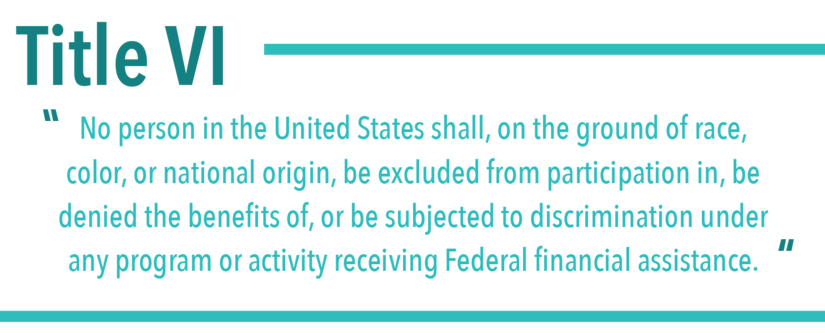
Title VI Civil Rights and Equal Opportunity Foundational Training
Learning Outcomes
By the end of this session, participants will be able to state what Title VI prohibits and on what grounds, identify which organizational activities are covered and why, explain how Title VI differs from the employment discrimination statutes they may be more familiar with, and identify the organization’s subcontractors as covered entities.
Course curriculum and objectives:
- The statutory prohibition in plain terms: exclusion from participation, denial of benefits, and discrimination on the grounds of race, color, or national origin.
- What triggers coverage: federal financial assistance, and what counts as assistance.
- How coverage attaches to the Department’s own funding streams, and how it flows to entities the Department funds.
- Institution-wide coverage under the Civil Rights Restoration Act of 1987, and why one funded program can bring the whole agency within scope.
- The three protected bases, and what Title VI does not reach.
- Where sex, age, and disability obligations come from instead, and why the Department’s civil rights program addresses them together.
- Section 1557 of the Affordable Care Act and its particular significance for a health agency.
- Title VI compared with Title VII: assistance recipients and programs on one side, employment on the other, and the statutory limit on Title VI’s reach into employment practices.
- National origin, ancestry, and shared ancestry: what the basis covers.
Racial Equity Group
0